Blog
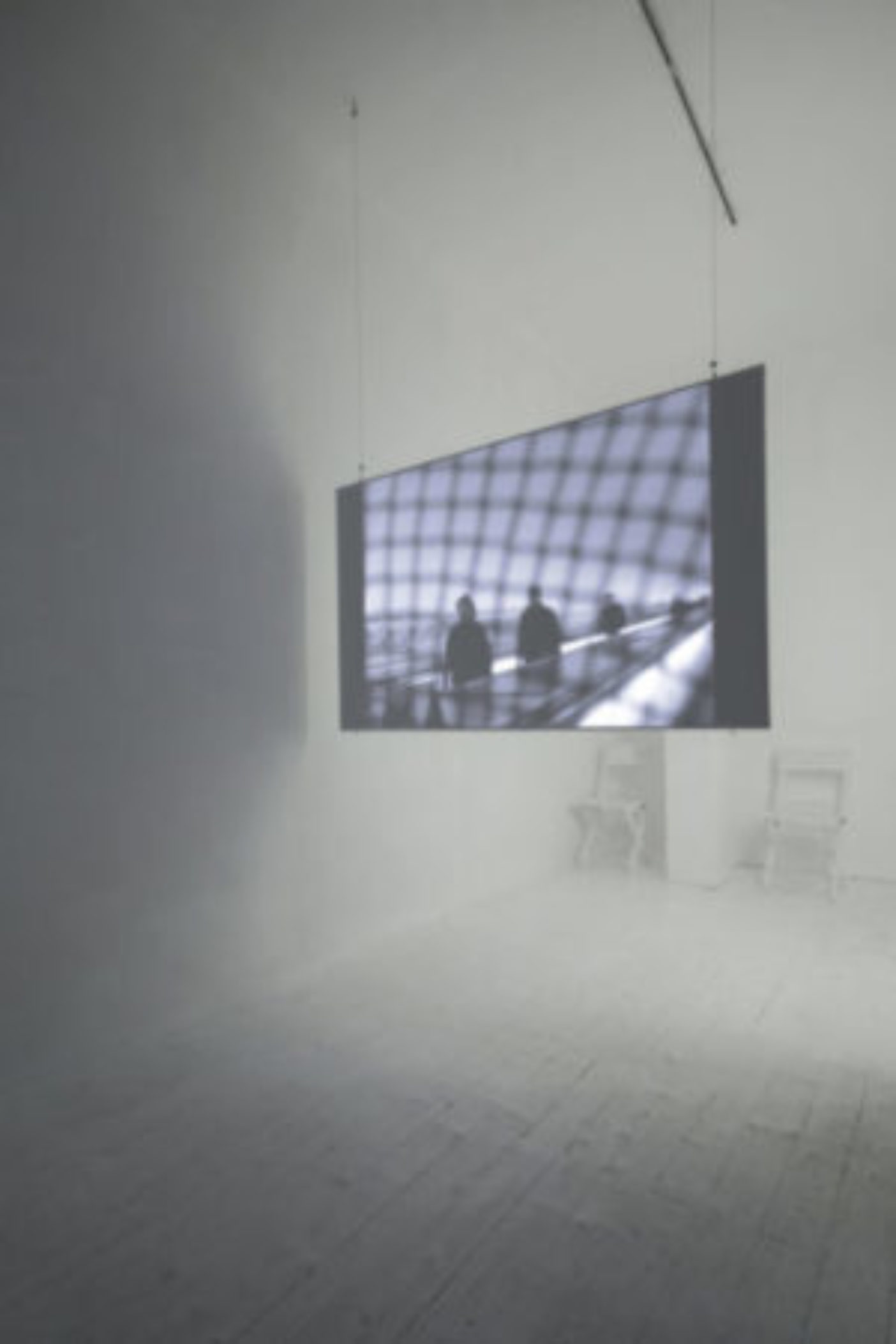
OPENING January 24, 2018 7pm
Opening: January 24, 2018 7pm
Ends: March 24, 2018
Artists: Halida Boughriet, Sharzad Changvalaee, Fatoş Irwen, Simin Keramati, Tahmineh Monzavi, Balqis al´Rashid, Dilan Cudi Saruhan, Nil Yalter, Arzu Yayıntaş
Dates: March 7, 2018 – Talk with Dr. Gabriele Schor (Sammlung Verbund); March 21, 2018 Book launch: Julia Allerstorfer, Visuelle Identitäten. Künstlerische Selbstinszenierungen in der zeitgenössischen iranischen Videokunst, Bielefeld 2017
Every person should have the exclusive right to dispose of their body as they wish. The body should be an untouchable personal zone. But power structures of a governmental or religious nature as well as certain social notions do restrict this right. In particular, women of the so called Near and Middle East are struggling for this right. However the undifferentiated, fragmentary idea of the subordinated, voiceless woman in the hijab, who has to be freed by external forces – an idea very prominent in the West – represents a false role as well. Per se it denies the individual self-determination of the many different women in the aforementioned region – just like some of the governmental or religious institutions in charge. Art is a field where – more or less safely – anyone can exercise this right on the own body. In Vienna the use of the body as artistic medium is prominent due to the Viennese Actionism, the works of Austrian artist VALIE EXPORT and the feminist avantgarde of the 70s, most of whom explored the medium of video. The central starting point of the exhibition at hinterland is on the one hand the awareness that a lot of female artists from Near and Middle Eastern countries use their bodies as their artistic tool as well as video as their medium, on the other hand the need for representations of the self instead of the other in order to replace generalisations. By showing different self-representations of artists who claim their right over their body the exhibition intends to draw the attention of the general public to those women who refuse both previously mentioned forms of heteronomy. The ways in which they put their protest into practice vary from intentionally breaking taboos, counteracting stereotypes, making mental pain visible on their body, to the corporeal claim of the public space
March 7, 2018
Talk with Dr. Gabriele Schor (Sammlung Verbund)
March 21, 2018
Book launch: Julia Allerstorfer, Visuelle Identitäten. Künstlerische Selbstinszenierungen in der zeitgenössischen iranischen Videokunst, Bielefeld 2017
Photo : ©jakob winkler
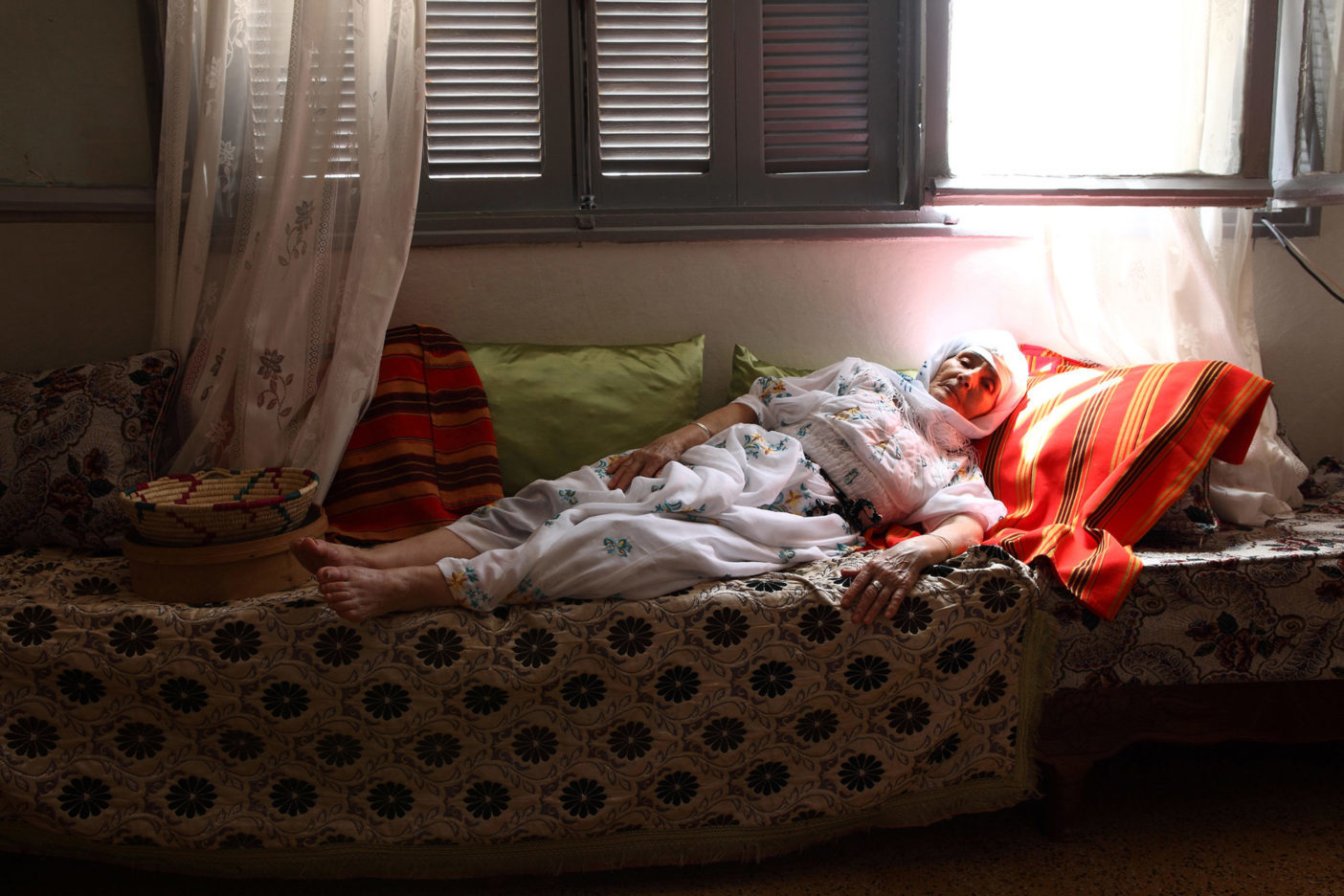
Paysages et portraits dans les collections du MAMA
Du 05 octobre 2017 au 29 octobre 2017 L’exposition Paysages et portraits dans les collection du MAMA est un aperçu sur une petite partie des collections du musée qui ont été constituées ces dernières années en grande partie grâce aux dons de généreux collectionneurs.
Riche et varié en auteurs, médiums et genres artistique, ce patrimoine mérite d’être montré de façon à faire vivre les œuvres en les partageants avec le public.
L’on entame ainsi avec cette exposition un cycle qui portera sur les thèmes, genres et médiums qui constituent les collections en fonction des œuvres disponibles.
Dans cette première exposition ont été sélectionnées des œuvres portant sur le paysage et le portrait. On peut y observer la diversité des médiums, styles et approches utilisés par les artistes qui donnent à voir des représentations multiples et différentes du paysage et du portrait réalisées à différents périodes et moments de leur parcours créatif.
L’exposition qui rassemble des artistes locaux et étrangers propose un échantillon de ces deux genres qui existent dans l’art depuis l’antiquité et qui continuent à vivre et à exprimer la vie des hommes dans leur environnement, leurs états d’âme et leur relation au monde.
Mondialisation, nouvelles technologies, numérique, internet ont généré les transformations sociales, économiques et culturelles qui changent la face du monde ; l’art a évolué vers de nouveaux modes d’expression, de nouveaux médiums et de nouveaux regards qui multiplient à une vitesse effrénée la quantité des images que nous consommons. Mais quels que soient les bouleversements que subit la représentation du monde, le portrait comme regard sur nous-mêmes et le paysage comme regard sur notre environnement (naturel ou artificiel) restent présents, sous quelque forme que ce soit, dans l’imaginaire des artistes et de l’homme en général.
Read On#TEASER – Implano de Arisana, 2018 by Halida Boughriet
Implano de Arisana, 2018 Installation for 6 projections with sound. © Halida Boughriet
—Along the Paillon, the backbone of the event, creations relating to a programme on the theme of the personal, social and political identities of territories, as conceived by MATHILDE ROMAN and MARC BARANI, will vary the formats and modalities of narration by day and by night, adapting to the specificities of places and works.
« Implano de Arisana » is large-scale public installation, the artist halida Boughriet will explorate public space while evoking voices of womens and stories from submerged and forgotten persons, histories and cultures, from the Ariane quarter.
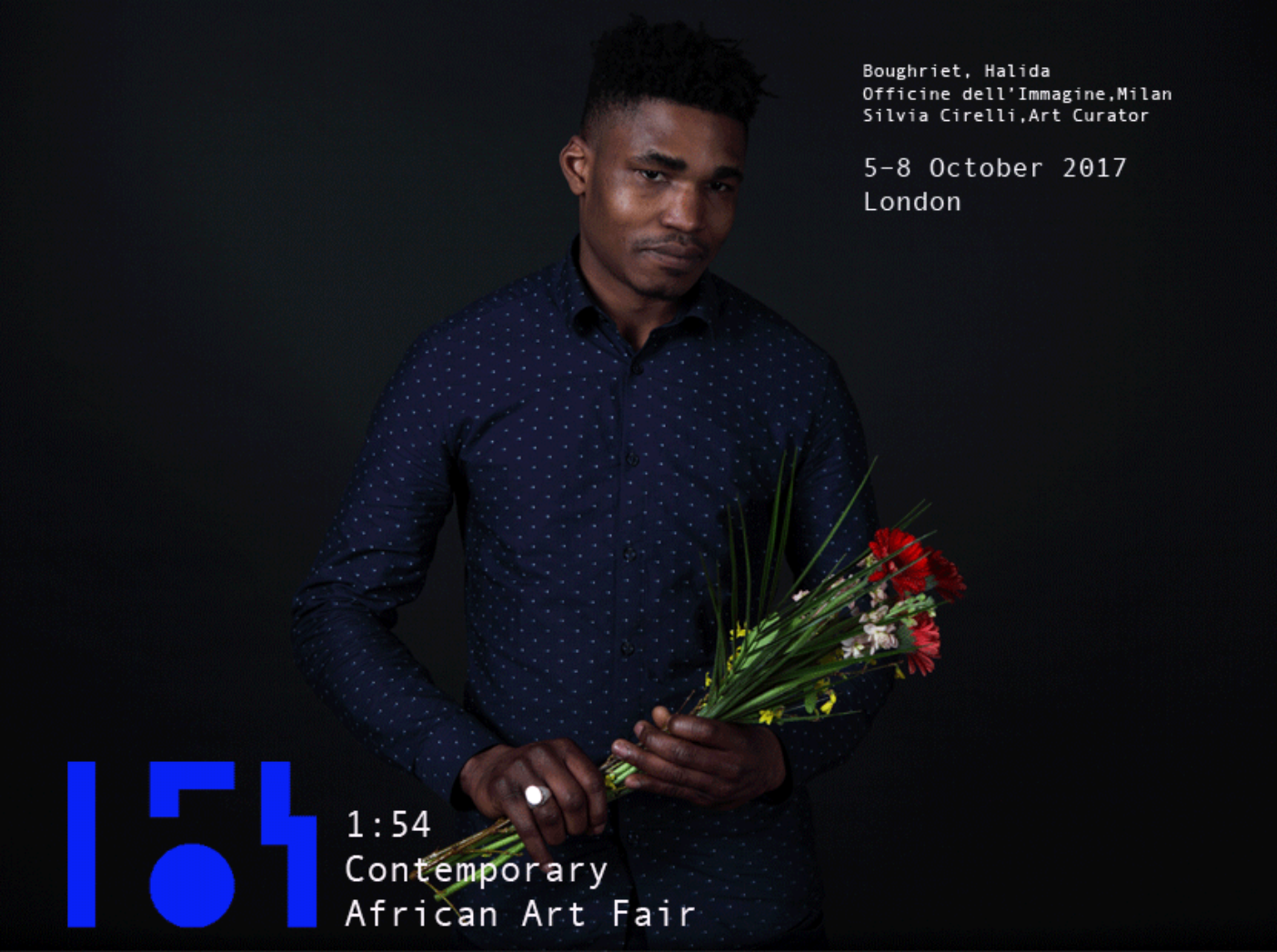
Somerset House, London, 5–8 October 2017
1:54 Contemporary African Art Fair returns for its fifth edition at Somerset House in London, 5–8 October 2017.
Halida Boughriet uses a broad range of media to address notions of performance in her practice. Working at a cross section of aesthetic, political and social concerns, Boughriet strives to capture current tensions in human relationships and society. This includes some given historical and social context, and the emotions conveyed in individual and collective memory.
Boughriet’s works have been exhibited in a number of international museums, such as Inventory: New Works and Conversations Around African Art, Hood Museum of Art, Hanover (2016); New cinema and Contemporary Art, Haus der Kulturen der Welt, Berlin (2015); Vidéo et Après, Centre Pompidou, Paris (2014); Avec et sans Peinture, Musée d’Art contemporain du Val-de-Marne, Vitry-sur-Seine (2014); Le Corps découvert, Institut du Monde Arabe, Paris (2012) and Human Frames, Kunst im Tunnel, Dusseldorf (2011). In 2015 her work was featured at the Rencontres Internationales, held in venues across Paris, Berlin and Madrid
http://1-54.com/london/exhibitors/officine-dellimmagine/
http://1-54.com/london/artists/boughriet-halida/
Read On
http://www.documenta14.de/en/public-radio/14723/the-border-of-the-shadow
Every Time A Ear di Soun, a documenta 14 Radio Program, on air from April 8 to September 17, 2017
The Border of the Shadow by Halida Boughriet
The sound piece is built around a time lapse (exile, immigration, generations, attachments, uninhabited territory) and put into perspective in relation to the present phenomenon known as “migrants.” Given the prevailing widespread misconceptions and negative stereotypes about migrants, Halida Boughriet attempts to reveal their status as individuals through their voices and their bodies. The notion of performance is also related to the use of random sounds, the alteration of musical instruments, interdisciplinary interweavings, speech harvesting, historical records, collage, and the heterogeneous juxtaposition of atmospheres and registers. This poetry of voices is not only a matter of declamation, but it also crafts language from a perspective of frame fragmentation, the questioning of structural logics, and vocal commitment by means of its historical, memorial, and physical nature.
Read On